
The President and the Vice-President of the Supreme Court of the Czech Republic Gave Speech at an International Conference on Communication Between the Judiciary and the Public
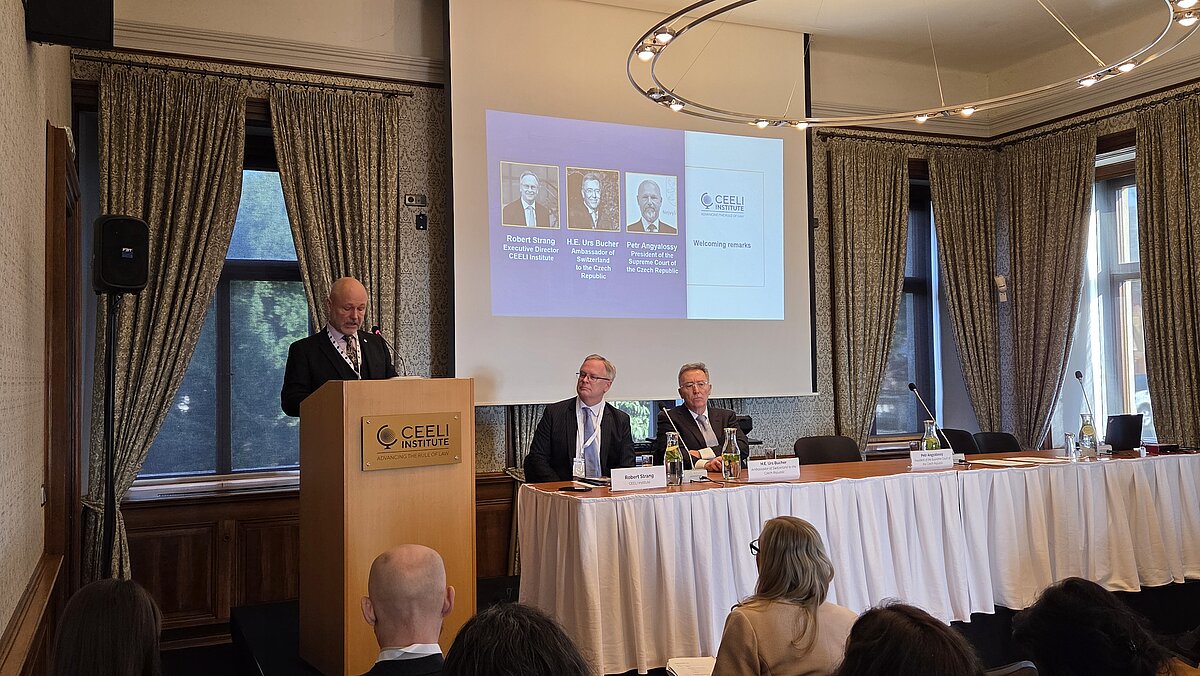
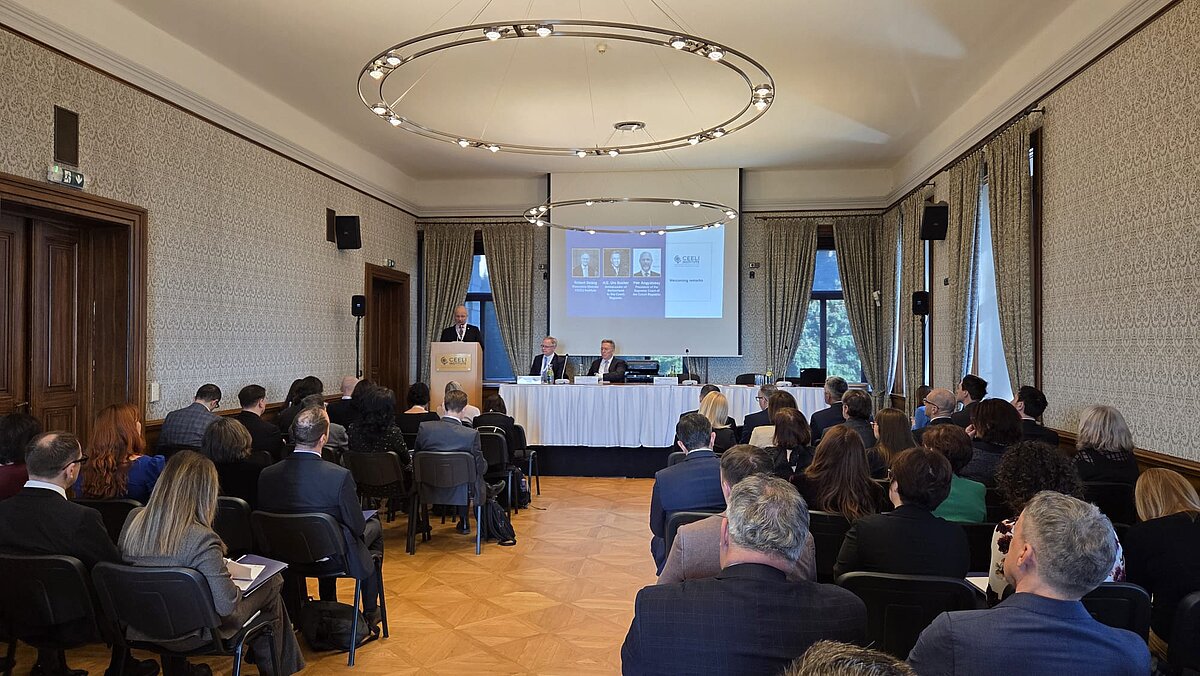
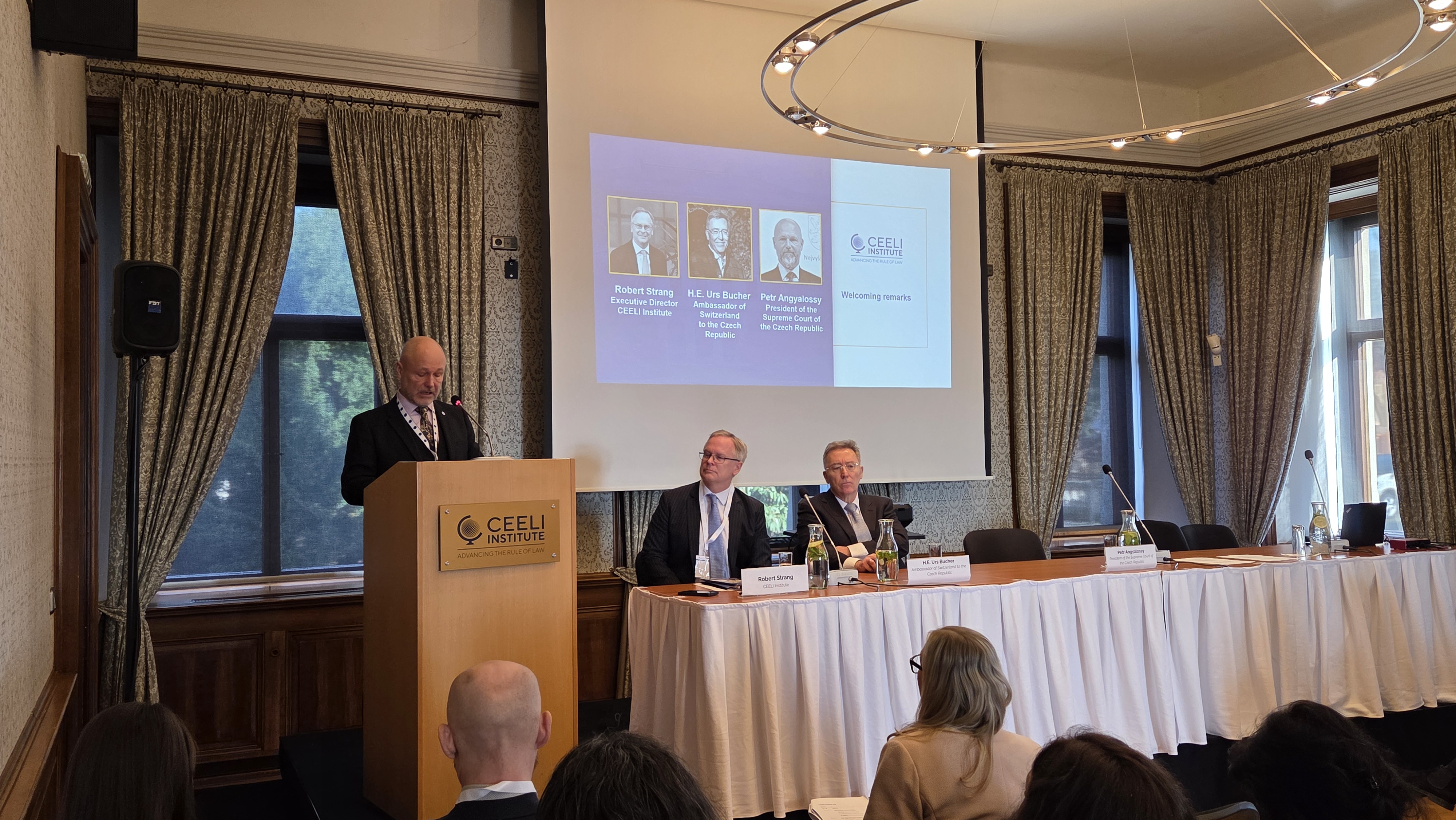
The President of the Supreme Court Petr Angyalossy gave speech at an international conference "Judicial Communication with Media and the Public – Judicial Independence, Rule of Law and Public Trust," organized by the CEELI Institute in Prague from 26 to 27 February 2026. The conference was attended by approximately 60 superior court officials and experts on judicial communication with the media from about 20 countries. Petr Šuk, the Vice-President of the Supreme Court of the Czech Republic, also gave speech at this event.
Together with the President of the Supreme Court of the Czech Republic, the conference was opened with contributions by Urs Bucher, the Ambassador of the Swiss Confederation to the Czech Republic, and Robert Strang, the Executive Director of the CEELI Institute.
Speakers at the conference included among others Canòlic Mingorance Cairat, judge of the European Court of Human Rights; senior judges from the United States of America; and current or former judges of the supreme and constitutional courts of Poland, Hungary, Albania, Romania, and other countries.
The conference responded to the growing pressure which judicial institutions are currently facing – from increased media attention and the speed of digital news reporting to the spread of disinformation. The participants discussed how responsible and professional communication can contribute to protecting the principles of the rule of law and resilience of democracy. A significant part of the programme also dealt with the limits of freedom of expression for judges and the possibility for judges to comment not only on court decisions and developments in the judiciary, but also on general issues concerning the direction of State policies affecting the independence of judges.
In his speech, the President of the Supreme Court of the Czech Republic stressed that courts traditionally communicate primarily through their decisions. "Today, however, this alone is not enough. If the judiciary was to resign from other forms of communication, it would risk losing public trust, legitimacy, and ultimately the perception of independence," he mentioned.
Petr Angyalossy also presented the Supreme Court´s activities in the area of communication – the systematic work of the Information Office and the Spokesperson, regular press releases, meetings with the media, educational activities for students, and active participation on social networks. He emphasized that the aim of these steps is to strengthen public confidence and contribute to the protection of the principles of the rule of law and the independence of the judiciary.
At the end of his speech, the President emphasized that although the judiciary naturally remains more reserved than the legislative or executive branches, it must not remain silent. "Courts exist to serve the people. They must therefore explain their activities and communicate in a way that is understandable and thus credible," said Petr Angyalossy.
The Vice-President of the Supreme Court Petr Šuk gave speech at the conference within the panel discussion on the role of judges, judicial associations, and other actors in strengthening the independence of the judiciary and building its credibility.
"The judiciary should be concise, clear, and accurate in its communication with the public. And even though it can sometimes be difficult to express oneself concisely, Einstein's old truth still applies: 'If you can't say it concisely, you don't understand it well enough,'" emphasized Petr Šuk.
This conclusion is supported by the fact that an increasing percentage of the public obtains information about the judiciary not from traditional sources, but from social networks, and in a very simplified form. It is therefore essential for courts to produce clear and concise information about the outcomes of their activities themselves and not to leave this important work to other entities.
The conference confirmed that strategic communication is becoming an integral part of the modern, self-confident, and independent judiciary.