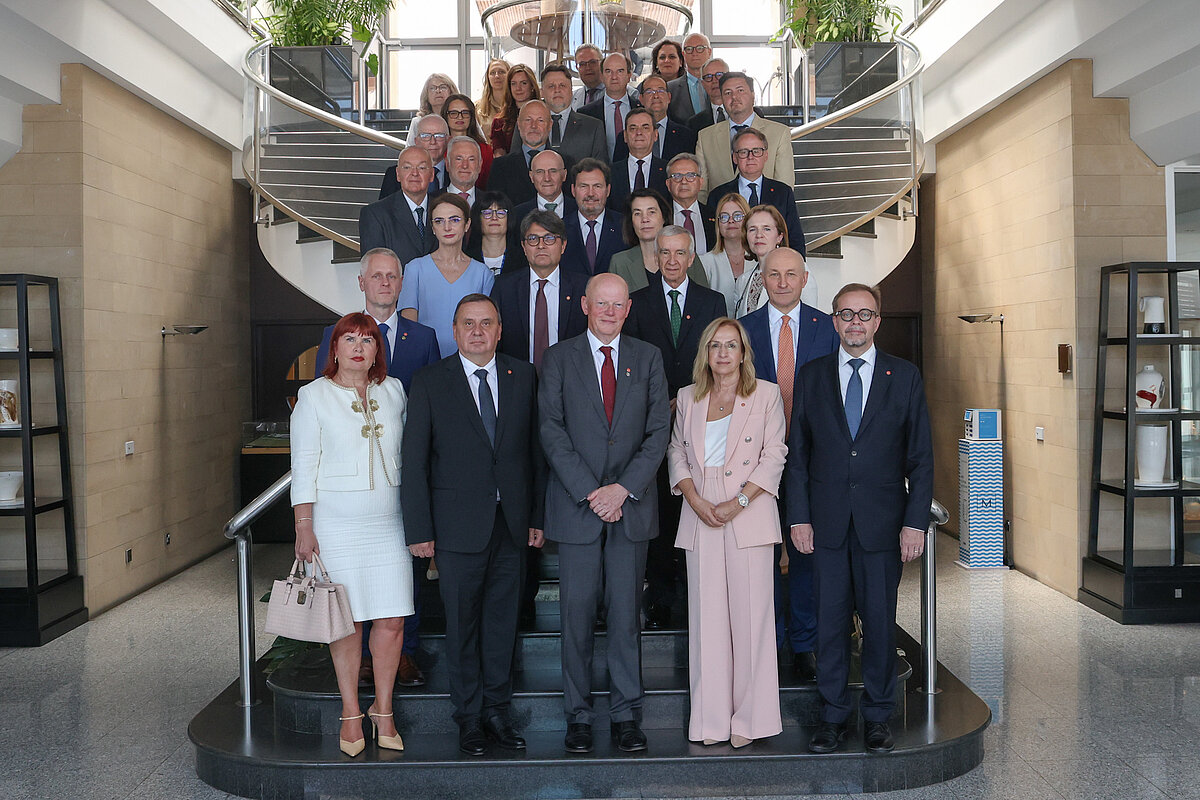

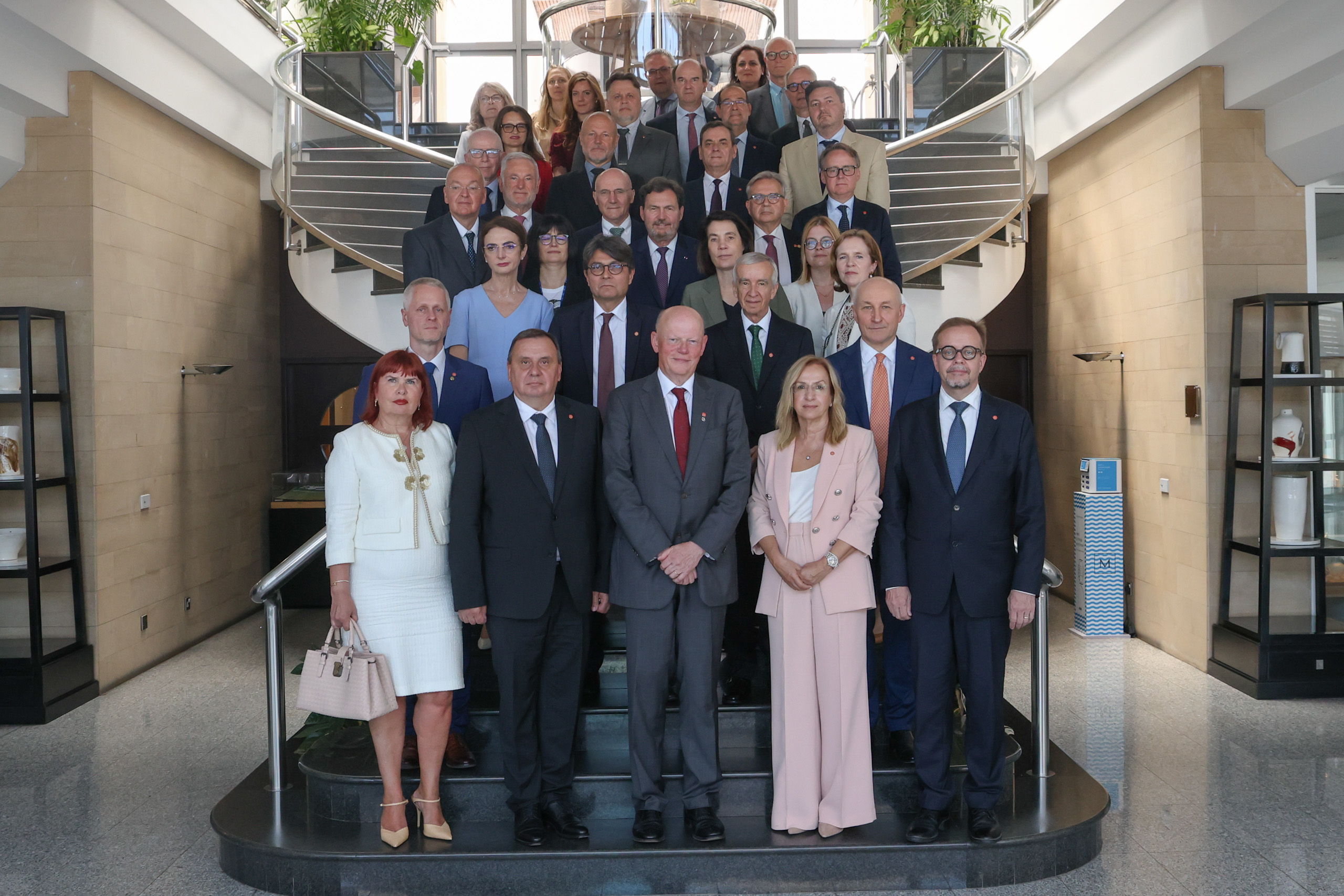
The President of the Czech Supreme Court Attended the Conference of the Network of the Presidents of the Supreme Judicial Courts of the European Union in Limassol
Petr Angyalossy, President of the Supreme Court of the Czech Republic, attended the Conference of the Network of the Presidents of the Supreme Judicial Courts of the European Union, which took place in Limassol, Cyprus, from 11 to 13 June 2026. Organised by the Supreme Court of the Republic of Cyprus, the annual meeting brought together the Presidents of the Supreme Courts of the European Union Member States, the United Kingdom, Iceland, Norway, Liechtenstein, and other countries with observer status, including Albania, Montenegro, Serbia, and Ukraine. The Conference serves as a forum for exchanging experiences, sharing best practices, and discussing current issues that affect the functioning of the judiciary within the European legal environment.
This year’s Conference, which took place under the presidency of Cyprus in the Council of the European Union, was attended not only by the Presidents of the Supreme Courts of the Member States of the European Union but also by representatives of the Court of Justice of the European Union, the European Court of Human Rights, and the Supreme Court of Canada. Keynote speakers included, for example, First Advocate General of the Court of Justice of the European Union Maciej Szpunar, former President of the European Court of Human Rights Síofra O’Leary, President of the Supreme Court of Finland Tatu Leppänen, and President of the Supreme Court of Canada Richard Wagner.
The main professional programme of this year’s Conference focused on two key topics. The first was Rule of Law: Challenges in the 21st Century, in particular the issues related to the independence of the judiciary, its institutional protection, and its position in relation to the other branches of government. The discussion touched on, among other things, interference with the status of judges, public statements by political leaders regarding the judiciary, and the experiences of countries that have faced erosion of the principles of the rule of law in the past. Participants also addressed the question of what role the Supreme Courts can play in protecting the fundamental values of a democratic state governed by the rule of law and in strengthening public trust in judicial institutions.
The second main topic was titled Protecting Individuals’ Rights in the Digital Sphere – the Impact of the Digital Services Act. The debate centred on the practical implications of this legislation, which aims to create a safer and more transparent online environment. Special attention was paid to the definition of illegal digital content, the liability of digital service providers, the possibilities for user protection, and the search for balance between protecting freedom of speech and the need to limit harmful phenomena on the Internet. The issue of a uniform interpretation of the concept of illegal content was also discussed, as well as the role that the Supreme Courts of individual States should play in establishing joint standards.
A significant part of the discussion was also devoted to the spread of false or manipulative information about judicial institutions in the digital sphere. Participants addressed how courts should respond to content that may undermine public trust in the judiciary without unduly infringing on freedom of speech and public debate.
“The Conference of the Network of the Presidents of the Supreme Judicial Courts of the European Union is an important platform for open discussion of fundamental issues faced by the judiciary today. Sharing experiences among the Supreme Courts of Member States is key to strengthening trust in the judiciary and to finding balanced solutions in rapidly evolving areas, such as the digital environment,” said Petr Angyalossy, President of the Supreme Court of the Czech Republic, who serves as Vice-President of the Network.