
The President of the Supreme Court of the Czech Republic Emphasized the importance of judicial Independence and Active Communication with the Public at the Conference of the Presidents of the Supreme Courts of Central and Eastern Europe in Skopje
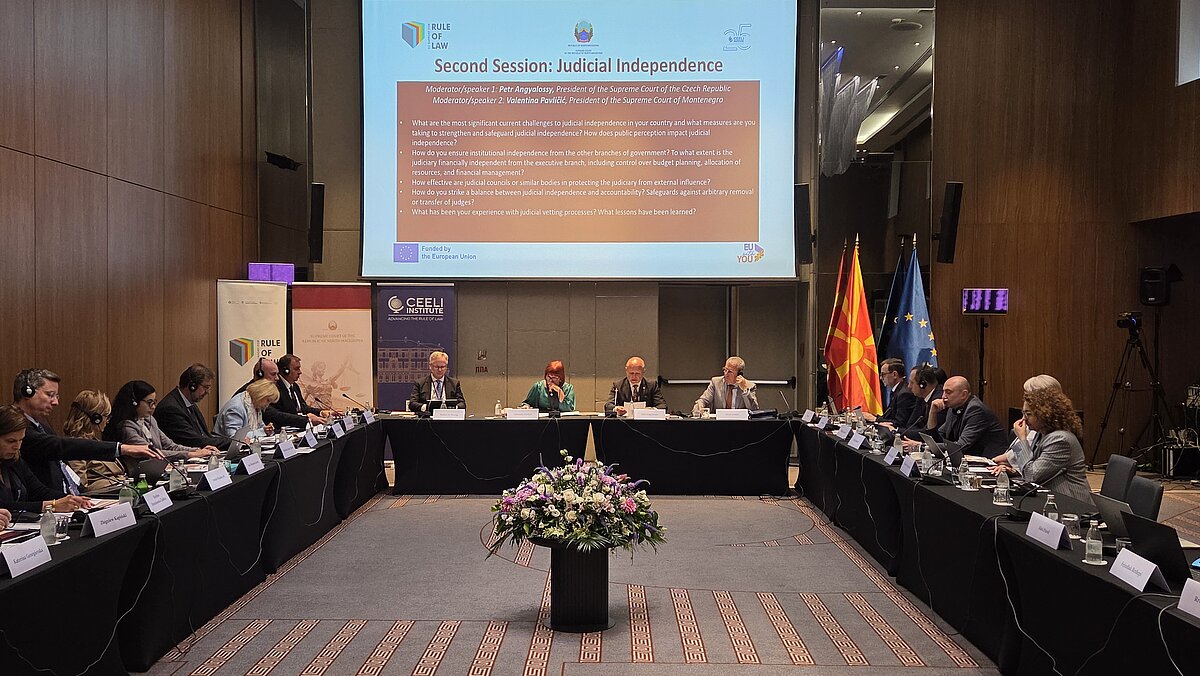
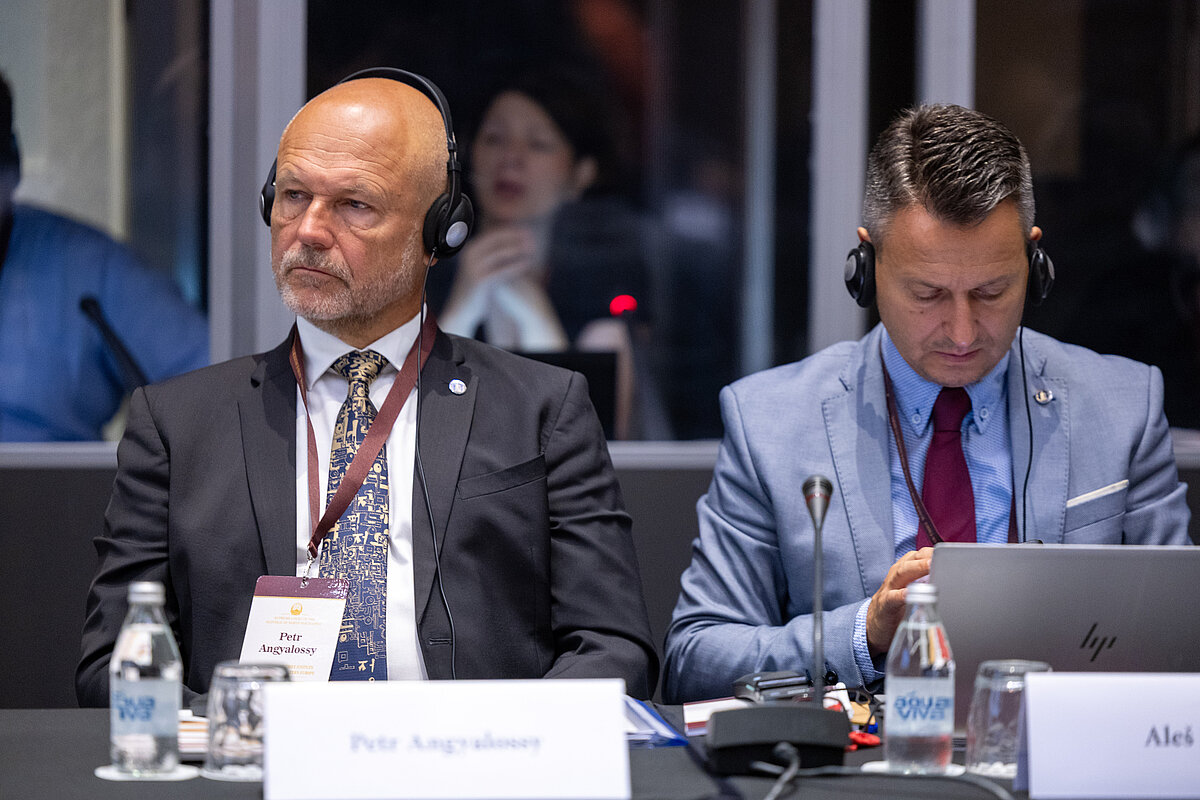
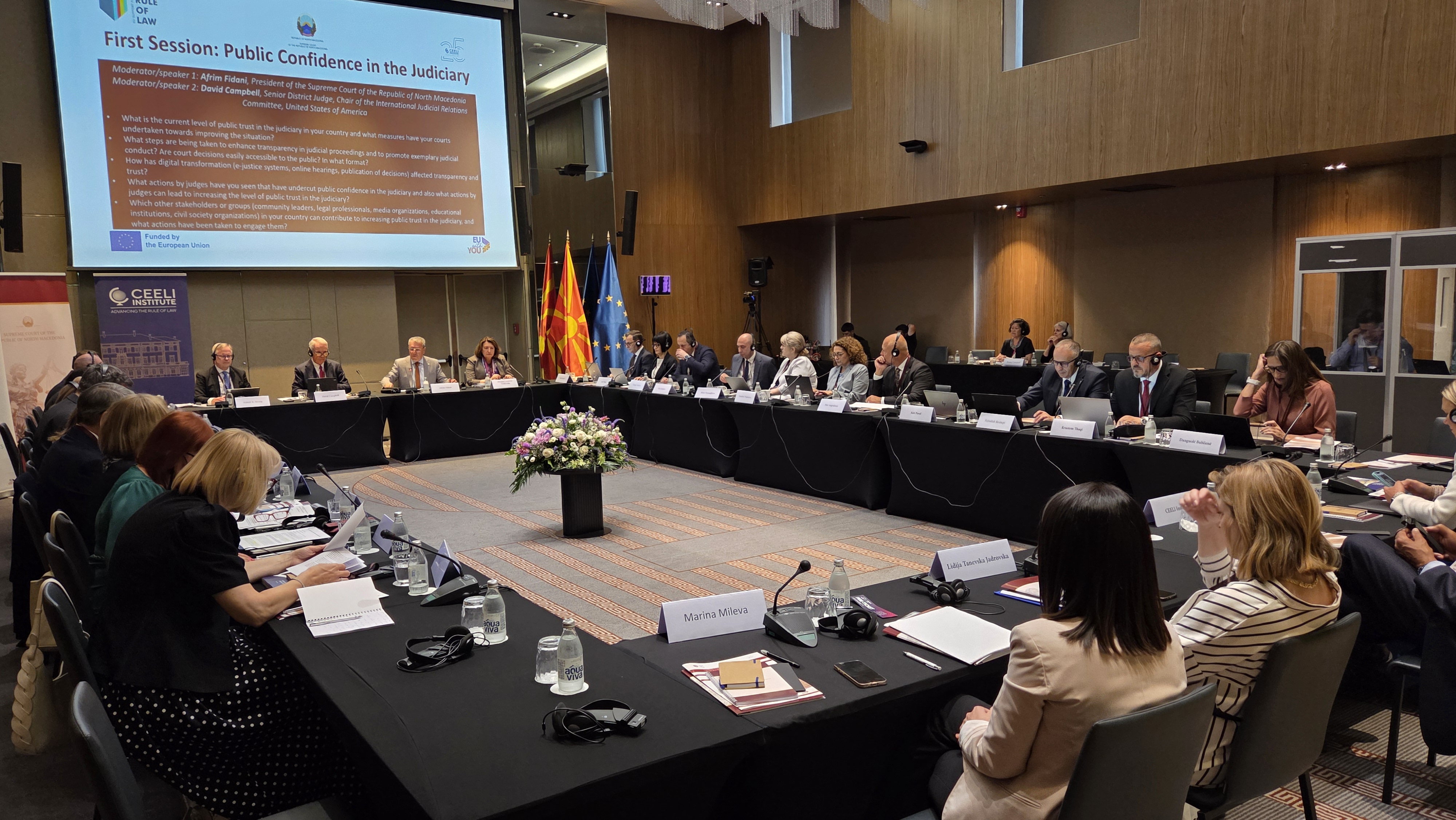
The public's trust in the judiciary, the independence of the courts, and responsible communication of judicial institutions towards the public were among the main topics of the speech delivered by Petr Angyalossy, President of the Supreme Court of the Czech Republic, at the Conference of the Presidents of the Supreme Courts of Central and Eastern Europe, which took place on June 22 and 23 in Skopje, North Macedonia.
During the professional discussions, Petr Angyalossy presented the Czech judiciary’s experience with strengthening the public’s trust in the judicial system. He emphasized that trust cannot be built solely through media communication, but primarily through the quality of judicial decision-making practice.
"The public's trust in the judiciary stems primarily from comprehensible, predictable, and impartial judicial decisions. The quality of judicial decision-making is just as important for building citizens' trust as a well-chosen communication strategy aimed at the general public," stated Petr Angyalossy, President of the Supreme Court.
At the same time, he pointed out that in today’s media environment, it is no longer enough for courts to rely solely on the content of their decisions. According to him, the public expects courts to clearly explain not only the role they play in society, but also their decisions.
“Communication has become a part of the responsibility of judicial institutions. If the courts are unable to explain their role and tasks to the public, it creates room for misunderstandings or misinterpretations,” said Petr Angyalossy.
He also focused a significant part of his speech on the issue of judicial independence. He noted that the independence of the judiciary is one of the fundamental prerequisites for the functioning of the rule of law and must be protected not only through legal safeguards but also through the professional integrity of the judges themselves. In this context, he highlighted the importance of the case law of the Constitutional Court of the Czech Republic and the European Court of Human Rights, which strengthens the protection of judicial independence in Europe.
Conference participants also discussed the impact of the case law of the European Court of Human Rights and the Court of Justice of the European Union on the decision-making practice of national courts, the use of artificial intelligence in the judiciary, and issues related to judges’ conduct in the public sphere. Petr Angyalossy presented the current experiences of Czech courts in using artificial intelligence tools, particularly in administrative and analytical tasks. He emphasized, however, that the decision-making process must remain exclusively in the hands of judges.
“Technology can assist the courts, but it cannot replace human judgment, responsibility, and the ability to assess the unique circumstances of each case. Judicial decision-making practice must remain a human discipline,” added Petr Angyalossy.
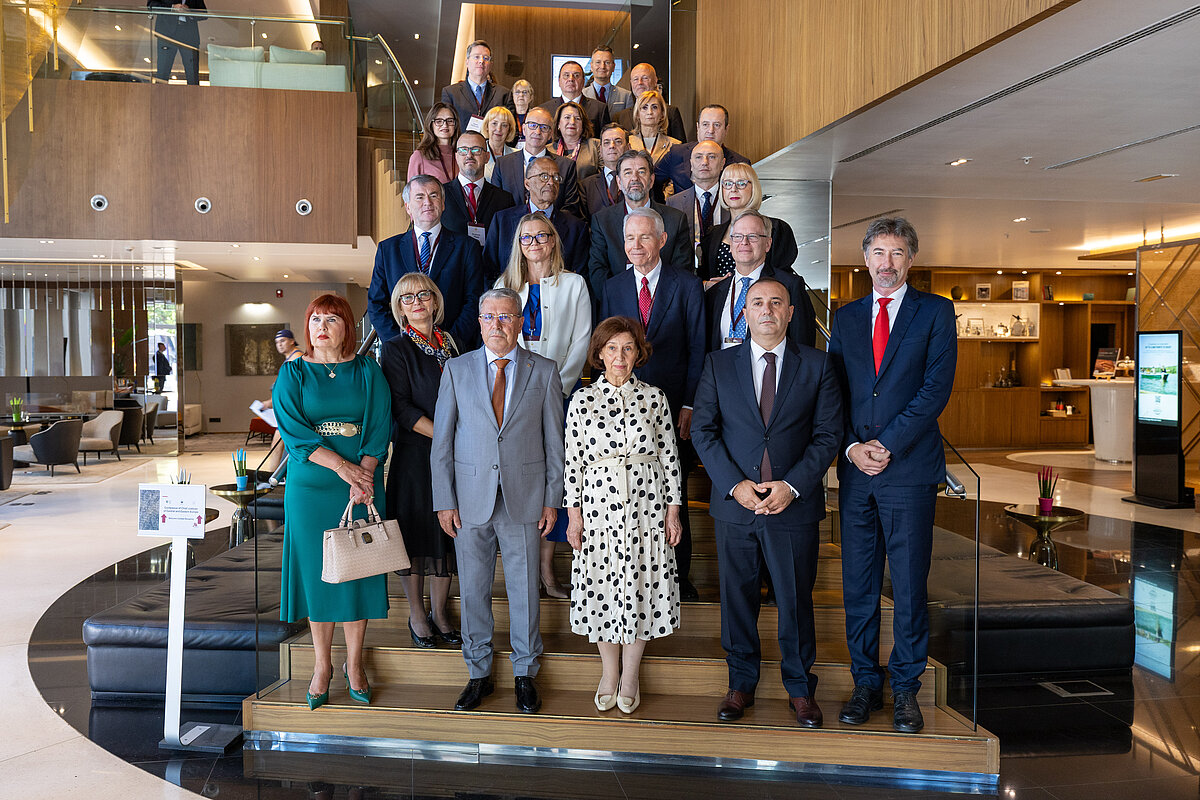
The Conference in Skopje provided a forum for the exchange of experiences among representatives of the Supreme Courts of Central and Eastern European countries and reaffirmed the importance of international dialogue in safeguarding the principles of the rule of law, judicial independence, and public confidence in the judiciary.